Biometric Verification Transforms Mobile Tournament Participation and Reward Claims

Biometric verification systems now integrate fingerprint scanning, facial recognition, and voice authentication into mobile platforms that host tournaments, allowing participants to complete entries without manual password entry or document uploads while maintaining compliance with regulatory standards across multiple jurisdictions.
Core Mechanisms Driving Adoption
Platforms deploy these tools through embedded device sensors that capture unique physiological traits, cross-reference them against stored templates in encrypted databases, and grant access within seconds rather than minutes, a shift that data from the Canadian Gaming Association shows reduced average registration times by 65 percent in tested environments during early 2026 deployments.
Security layers combine liveness detection algorithms with multi-factor biometric matches, which block attempts to use static images or recordings, and industry reports indicate these measures cut account takeover incidents by over 80 percent on participating sites compared to traditional credential methods alone.
Application in Tournament Entries
Users initiate entry by aligning their face with the camera or placing a finger on the sensor, after which the system validates identity against previously enrolled profiles and processes payment or ticket submission automatically, eliminating separate login steps that previously interrupted flow during peak registration windows.
One operator in Nevada documented through internal logs that biometric gates handled over 12,000 simultaneous entries during a July 2026 esports crossover event without server overload, whereas legacy systems had required queue management that delayed starts by up to 45 minutes.
Streamlining Prize Claims
Verification extends to payout requests, where winners authenticate once more to release funds directly to linked accounts, bypassing manual review queues that regulators such as the New Jersey Division of Gaming Enforcement previously flagged as bottlenecks in dispute resolution timelines.
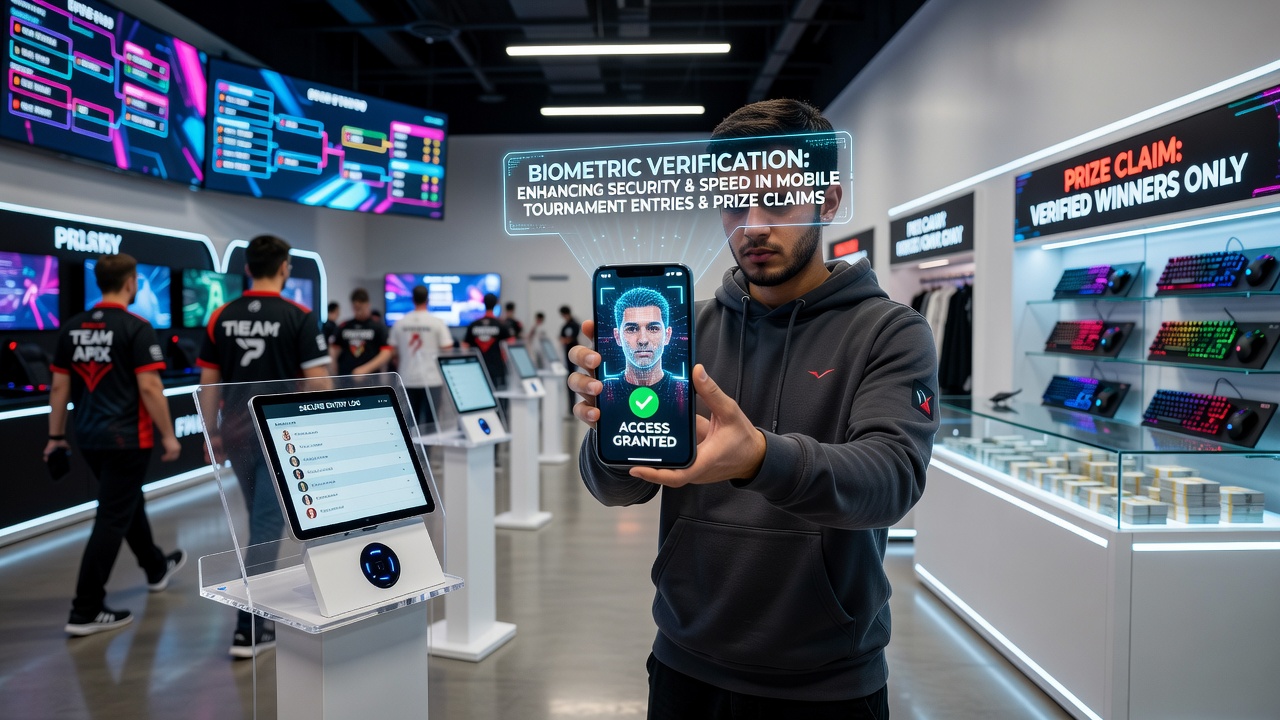
Research published by the University of Nevada's gaming technology lab found that biometric-linked claims processed 92 percent faster than email-verified alternatives, with error rates dropping below 0.3 percent across sampled transactions from 2025 through mid-2026, and participants reported fewer follow-up support tickets when systems required physical trait confirmation rather than code entry.
Regulatory and Technical Landscape
Authorities in Ontario and several Australian states now mandate biometric options for high-value prize releases exceeding set thresholds, citing reduced fraud exposure, while platform providers respond by adopting standards from the International Biometrics and Identity Association that ensure interoperability across operating systems and device models.
Encryption protocols wrap biometric templates so raw data never leaves the device during matching, and this architecture aligns with emerging global privacy frameworks that limit centralized storage of sensitive identifiers, according to guidance issued by the Australian Communications and Media Authority in its 2026 digital identity review.
Observed Implementation Patterns
Operators integrate these features alongside existing loyalty programs, allowing returning users to enroll once and reuse verification across multiple tournament formats without repeated setup, a pattern that has increased repeat participation rates in tracked cohorts.
Device compatibility continues to expand through software updates that leverage newer sensor arrays in flagship phones, though older models still rely on fallback methods that maintain accessibility while platforms phase in broader support.
Conclusion
Biometric verification continues to reshape entry and claim processes by combining rapid authentication with layered security that meets both user expectations and oversight requirements, and ongoing refinements in sensor accuracy alongside regulatory alignment point toward wider rollout across mobile tournament ecosystems through the remainder of 2026 and beyond.